

| Quick Answer: Most circuit court civil cases must participate in mediation before trial unless an exception or exemption applies. A jury trial usually begins with jury selection, followed by opening statements, witness testimony, exhibits, closing arguments, and legal instructions. The plaintiff generally must prove negligence and actual damages by a preponderance of the evidence. A standard South Carolina circuit court civil jury has 12 members and ordinarily must reach a unanimous verdict. After the verdict, either side may pursue authorized post-trial motions or an appeal, but strict deadlines apply. |
When settlement negotiations do not resolve a South Carolina personal injury claim, the case may proceed to trial. At that point, the parties present admissible evidence to a judge or jury, witnesses testify under oath, and the plaintiff must prove the defendant’s legal responsibility and resulting damages.
A personal injury trial is not simply a longer insurance negotiation. It is a formal court proceeding controlled by South Carolina procedural and evidence rules. The judge determines legal questions and which evidence the jury may hear, while the jury generally decides disputed facts, fault, causation, and damages.
Knowing how the process works can make trial feel less unfamiliar and help an injured person work more effectively with legal counsel.
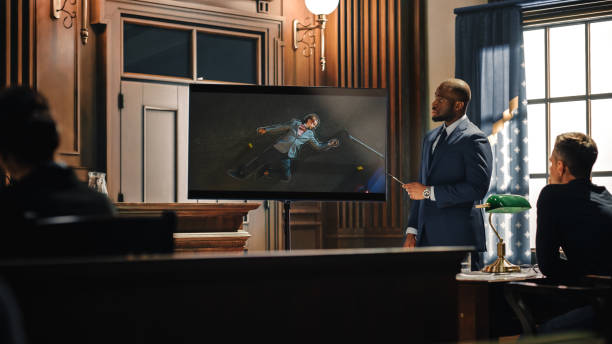
Do Most Personal Injury Cases Go Directly to Trial?
No. A lawsuit ordinarily passes through several stages before a jury is selected.
Settlement discussions may occur before the lawsuit is filed, during discovery, at mediation, while pretrial motions are pending, or even after the trial begins. A case usually reaches a verdict only when the parties cannot agree about liability, damages, insurance coverage, or another significant issue.
Reliable South Carolina-specific data do not support a universal statement that a particular percentage of personal injury cases settles. Outcomes vary by case type, injuries, venue, insurance coverage, evidence, and the parties’ willingness to compromise.
Mediation Usually Occurs Before Trial
South Carolina’s Court-Annexed Alternative Dispute Resolution Rules generally make civil actions filed in circuit court subject to court-ordered mediation unless the case falls within an exception or the court grants an exemption for good cause.
During mediation, a neutral mediator helps the parties evaluate the dispute and explore settlement. The mediator does not determine fault, force either side to accept an offer, or issue a trial verdict.
The parties retain control over whether to settle. When mediation ends without an agreement, the case may continue toward trial.
How Long Does a Personal Injury Trial Take?
South Carolina law does not assign one standard length to every personal injury trial.
A relatively straightforward automobile collision trial may take several court days. A medical malpractice, defective product, catastrophic injury, or multi-defendant case may require substantially longer.
Trial length depends on factors such as:
- Number of witnesses
- Number and complexity of expert opinions
- Amount of medical evidence
- Disputes over admissibility
- Number of defendants
- Availability of witnesses
A case may also be placed on a trial roster without being reached immediately. Parties should be prepared for scheduling changes, recesses, and periods of waiting.
Stage 1: Jury Selection
The first visible stage of a jury trial is commonly called voir dire, meaning the examination of prospective jurors.
The judge, attorneys, or both may ask questions designed to identify whether a potential juror can decide the case fairly. Questions may concern:
- Relationships with the parties, attorneys, or witnesses
- Prior accident or injury claims
- Experience with insurance disputes
- Medical or employment background
- Strong views about lawsuits or damages
- Scheduling hardships
- Biases that could affect impartiality
South Carolina Rule of Civil Procedure 47 allows the court to conduct the examination or permit the parties or attorneys to participate, subject to the judge’s control. It also permits alternate jurors who may replace regular jurors who become unable or disqualified to continue before deliberations begin.
Challenges for Cause
A prospective juror may be removed for cause when the juror cannot be impartial or is otherwise legally disqualified.
The party requesting removal explains the reason, and the judge decides whether the challenge should be granted.
Peremptory Challenges
Parties also have limited opportunities to remove prospective jurors without establishing the same type of legal cause.
Peremptory challenges cannot lawfully be exercised for discriminatory reasons. Jury selection is intended to produce an impartial jury, not a jury committed to either party before hearing the evidence.
How Many Jurors Hear a South Carolina Civil Case?
A standard South Carolina circuit court civil jury consists of 12 people. Its verdict ordinarily must be unanimous unless the parties agree to a smaller jury or another permitted verdict arrangement.
Rule 48 allows the parties to stipulate to fewer than 12 jurors or to a stated majority verdict, but those arrangements are exceptions rather than the default.
Stage 2: Preliminary Instructions and Opening Statements
After the jury is selected and sworn, the judge may give preliminary instructions explaining the jurors’ responsibilities, courtroom rules, and the difference between evidence and attorney statements.
The attorneys then deliver opening statements.
The plaintiff’s attorney generally speaks first because the plaintiff has the burden of proof. The defense follows, although the defense may sometimes reserve its opening depending on the court’s procedure and strategy.
An opening statement should explain:
- What the case concerns
- What the evidence is expected to show
- Which witnesses are expected to testify
- What issues the jury will decide
- How the injuries and losses occurred
An opening statement is not evidence. South Carolina Rule of Civil Procedure 43 permits counsel to outline the allegations and theory of the case but prohibits arguing the case during the opening.
Stage 3: The Plaintiff Presents the Case
The plaintiff presents evidence first because the plaintiff must prove the claim.
The plaintiff’s case may include testimony from:
- The injured person
- Family members
- Eyewitnesses
- Investigating officers
- Treating physicians
- Therapists
- Medical experts
The plaintiff may also offer exhibits such as:
- Accident-scene photographs
- Surveillance or dashboard-camera footage
- Medical records
- Medical bills
- Diagnostic images
- Employment and wage records
The judge does not automatically admit every item an attorney displays or mentions. The offering party must establish the proper evidentiary foundation, and the opposing party may object.
What Will the Injured Plaintiff Be Asked at Trial?
The injured person’s testimony is often central to the case.
Direct examination by the plaintiff’s attorney may cover:
- Personal background
- Health before the accident
- How the incident happened
- Immediate symptoms
- Emergency treatment
- Medical diagnoses
- Surgeries and therapy
- Physical restrictions
The purpose is not to give a dramatic performance. The strongest testimony is usually truthful, specific, measured, and consistent with the medical and documentary evidence.
Cross-Examination of the Plaintiff
The defense attorney may question the plaintiff about:
- Prior injuries or medical conditions
- Gaps in treatment
- Missed appointments
- Inconsistent statements
- Social media posts
- Employment history
- Activities after the accident
- Statements made during a deposition
- Whether medical restrictions were followed
- Other possible causes of the symptoms
Cross-examination is part of the adversarial process. It does not necessarily mean the attorney personally disbelieves or dislikes the plaintiff.
The plaintiff should listen carefully, answer only the question asked, avoid guessing, and request clarification when a question is unclear.
Stage 4: The Defense Presents Its Case
After the plaintiff rests, the defense may present witnesses and exhibits.
The defense may attempt to show that:
- The defendant was not negligent
- Another person caused the accident
- The plaintiff was partly or primarily at fault
- The accident did not cause the claimed condition
- The injuries were less severe than alleged
- Medical treatment was excessive or unrelated
- The plaintiff could return to work
- Future treatment is unnecessary
- The requested damages are unsupported
Defense witnesses may include the defendant, eyewitnesses, company employees, medical examiners, reconstruction experts, biomechanical experts, vocational professionals, or economists.
The plaintiff’s attorney may cross-examine each defense witness and challenge the witness’s methodology, assumptions, memory, credibility, compensation, or potential bias.
Stage 5: Rebuttal Evidence
After the defense completes its presentation, the plaintiff may be permitted to offer rebuttal evidence.
Rebuttal is generally limited to answering new matters raised by the defense. It is not an unrestricted opportunity to repeat the plaintiff’s entire case or present evidence that should have been offered earlier.
The judge determines the permissible scope of rebuttal.
How Does the Court Decide Which Evidence the Jury Can Hear?
South Carolina’s Rules of Evidence control admissibility.
Evidence generally must be relevant, meaning it has some tendency to make an important disputed fact more or less probable.
Even relevant evidence may be excluded when its value is substantially outweighed by dangers such as unfair prejudice, confusion, misleading the jury, undue delay, or needless presentation of cumulative evidence.
Documents, photographs, messages, and recordings may also require authentication. The party presenting the item must offer sufficient evidence that it is what the party claims it is.
What Happens When an Attorney Objects?
An objection asks the judge to apply an evidence or procedure rule.
Common objections may concern:
- Hearsay
- Relevance
- Lack of foundation
- Improper expert opinion
- Leading questions
- Speculation
When the judge sustains an objection, the witness generally may not answer the question as asked, or the disputed evidence is excluded.
When the judge overrules the objection, the testimony or evidence may proceed.
The parties should not react visibly to rulings. An objection is a legal procedure rather than a personal confrontation.
Will the Jury Be Told About Liability Insurance?
Usually, the existence or absence of liability insurance is not admitted to prove that a defendant acted negligently or wrongfully.
An insurer may have investigated the claim, paid defense expenses, selected counsel, or participated in settlement decisions. Even so, the insurer is not necessarily named as a party or identified to the jury.
South Carolina Rule of Evidence 411 excludes evidence that a person was or was not insured when offered to prove negligence or wrongful conduct. Insurance evidence may be admitted for another legitimate purpose, such as proving ownership, control, agency, or witness bias, when the legal requirements are satisfied.
Stage 6: Motions During Trial
Attorneys may make legal motions after the plaintiff rests or after all evidence has been presented.
One such request asks the judge to decide an issue without sending it to the jury because the evidence is legally insufficient to support a contrary finding.
The judge may:
- Grant the motion entirely
- Grant it as to a particular claim or defense
- Deny it and allow the jury to decide
- Reserve a ruling as permitted by law
A denied motion does not mean the judge believes the opposing side should win. It generally means the evidence presents an issue the jury is legally permitted to decide.
Stage 7: Closing Arguments
Closing arguments occur after the evidence has been completed.
Unlike opening statements, closing arguments allow the attorneys to analyze admitted evidence and explain why the jury should reach a particular result.
The plaintiff’s attorney may connect:
- Witness testimony
- Medical records
- Expert opinions
- Photographs
- Financial losses
- Admissions
The defense may argue that liability was not proven, the plaintiff shared fault, medical causation is uncertain, or the requested damages exceed what the evidence supports.
Because the plaintiff bears the primary burden of proof, the plaintiff generally has the right to open and close the argument. This may include an initial closing, the defense’s argument, and a limited reply by the plaintiff.
Closing arguments are not evidence. Jurors must base the verdict on admitted testimony and exhibits as evaluated under the judge’s instructions.
Stage 8: The Judge Instructs the Jury
After closing arguments, the judge explains the law the jury must apply.
Instructions may cover:
- Negligence
- Duty and breach
- Proximate cause
- Comparative negligence
- Witness credibility
- Expert testimony
The attorneys may propose instructions, but the judge determines the final legal charge. Under South Carolina Rule of Civil Procedure 51, the court instructs the jury after arguments, and objections to instructions must be properly raised before the jury retires.
The jury must follow the judge’s statement of the law even when an attorney described the law differently during argument.
What Is the Plaintiff’s Burden of Proof?
In an ordinary South Carolina civil case, the plaintiff generally must prove the affirmative allegations by a preponderance of the evidence.
This standard is lower than the criminal standard of proof beyond a reasonable doubt. It generally asks whether the proposition is more probably true than not true when the evidence is weighed.
The plaintiff normally must establish:
- The defendant owed a legal duty.
- The defendant breached that duty.
- The breach proximately caused the injury.
- The plaintiff sustained legally compensable damages.
The defendant generally carries the burden of proving affirmative defenses, such as comparative negligence, when applicable. South Carolina’s official juror materials identify preponderance of the evidence as the ordinary civil standard.
How Does Comparative Negligence Affect the Verdict?
South Carolina follows a modified comparative negligence rule.
A plaintiff may generally recover when the plaintiff’s negligence is not greater than the defendant’s negligence. The award is then reduced according to the plaintiff’s percentage of fault.
For example, when the jury determines that total damages are $200,000 and assigns 20% of the fault to the plaintiff, the recoverable amount may be reduced by 20%, subject to other applicable rules.
When the plaintiff’s fault exceeds 50% in a claim against a single defendant, recovery is generally barred. At exactly 50%, the plaintiff’s damages may generally be reduced by that percentage rather than completely barred. South Carolina adopted this modified comparative negligence standard in Nelson v. Concrete Supply Co. and continues to apply it in negligence cases.
| Did You Know? A jury may decide both whether the defendant was negligent and whether the plaintiff contributed to the injury. The plaintiff’s percentage of fault can reduce or, when greater than 50%, prevent recovery in a typical single-defendant negligence case. |
What Damages Can a Jury Consider?
The available damages depend on the claims, evidence, and instructions.
Economic Damages
Economic losses may include:
- Past medical expenses
- Reasonably necessary future medical care
- Past lost wages
- Reduced future earning capacity
- Rehabilitation costs
- Property damage
- Necessary household or personal assistance
These damages require supporting evidence and cannot be based entirely on speculation.
Noneconomic Damages
Noneconomic damages may compensate for consequences that do not come with a single invoice, including:
- Physical pain
- Emotional distress
- Loss of enjoyment of life
- Permanent impairment
- Scarring or disfigurement
- Inconvenience
- Loss of consortium when properly claimed
The jury evaluates these losses using the evidence and the judge’s instructions. No universal formula determines their value.
When Are Punitive Damages Considered?
Punitive damages are not available in every personal injury case. They are intended to punish and deter particularly serious misconduct rather than compensate the plaintiff for an ordinary loss.
South Carolina requires the plaintiff to prove by clear and convincing evidence that the harm resulted from willful, wanton, or reckless conduct.
When punitive damages are properly submitted, South Carolina law provides for a bifurcated process. The jury first considers liability for compensatory damages. In a second stage, it determines whether punitive damages should be awarded and, when appropriate, the amount.
Stage 9: Jury Deliberations
After receiving the evidence, verdict form, and legal instructions, the jury retires to deliberate privately.
Jurors may:
- Review admitted exhibits
- Discuss witness credibility
- Apply the judge’s instructions
- Assess fault
- Determine causation
- Calculate damages
- Submit written questions to the judge
The attorneys, parties, and judge do not participate in deliberations.
Jurors should not conduct independent internet research, visit the accident scene, consult outside sources, or discuss the case with non-jurors. They must decide the case from the evidence admitted in court and the law provided by the judge.
There is no fixed deliberation period. A jury may return quickly or continue deliberating for hours or days, depending on the complexity and level of agreement.
Stage 10: The Verdict
When the jury reaches a decision, it returns to the courtroom, and the verdict is announced.
The verdict form may address:
- Whether the defendant was negligent
- Whether negligence caused the injury
- Whether the plaintiff was negligent
- Each party’s percentage of fault
- The amount of actual damages
- Whether punitive damages should be considered
- Other case-specific questions
The court may poll the jurors to confirm the verdict.
A favorable verdict does not always mean the plaintiff immediately receives payment. The court must enter judgment, and post-trial motions, insurance issues, liens, collection matters, or an appeal may affect the timing.
What Happens If the Jury Cannot Agree?
Because a standard circuit court civil verdict ordinarily must be unanimous, prolonged disagreement may lead the judge to provide additional lawful instructions and direct the jury to continue deliberating.
When the jury remains unable to reach a verdict, the judge may declare a mistrial because of a hung jury.
A mistrial does not automatically mean either side wins. The case may be set for another trial unless the parties settle or another legal ruling resolves it.
Can the Case Settle After Trial Begins?
Yes. Parties may continue negotiating after jury selection, during testimony, or before the verdict is returned.
A trial settlement should be clearly documented. South Carolina Rule of Civil Procedure 43 provides that agreements affecting the proceedings are generally binding when entered as a consent order, placed on the record in open court, or reduced to a qualifying written agreement.
Settlement during trial may reduce uncertainty, but the decision should be based on the evidence, available coverage, litigation risks, liens, costs, and the client’s informed priorities, not fear or pressure alone.
What Happens After the Verdict?
A verdict may be followed by several procedural steps.
Entry of Judgment
The court enters a judgment reflecting the legally enforceable result. The judgment may incorporate the verdict and any rulings made by the judge.
Post-Trial Motions
A party may seek relief through an authorized motion, such as a request for:
- Judgment notwithstanding the verdict or judgment as a matter of law
- A new trial
- An amended judgment
- Correction of a clerical error
Under South Carolina Rule of Civil Procedure 59, a motion for a new trial in a jury case must be made promptly after the jury is discharged or, in the court’s discretion, no later than 20 days afterward. Different motions may have different requirements and deadlines.
Appeal
An appeal is not a complete new trial with new witnesses. An appellate court generally reviews preserved legal errors based on the trial record.
South Carolina Appellate Court Rule 203 generally requires a notice of appeal in a civil case to be served within 30 days after receipt of written notice of entry of the order or judgment. A timely post-trial motion may affect when that period begins.
| Quick Insight! A jury-trial motion for a new trial must generally be made promptly or within the period allowed by Rule 59. A civil notice of appeal is generally due within 30 days after receipt of written notice of entry of judgment, subject to rules affecting the deadline. |
How Should a Plaintiff Prepare to Testify?
Trial preparation should help the plaintiff communicate accurately, not memorize a performance.
Useful preparation includes:
- Reviewing deposition testimony
- Revisiting the medical timeline
- Understanding the sequence of treatment
- Identifying continuing symptoms
- Reviewing employment losses
- Discussing prior medical conditions honestly
The plaintiff should never exaggerate, guess, hide an unfavorable fact, or attempt to outargue opposing counsel.
When the correct answer is “I do not remember,” that answer should be given. When a question is unclear, the witness may ask that it be repeated or rephrased.
What Should You Wear and Bring to Court?
A personal injury plaintiff should generally wear clean, conservative clothing suitable for a formal professional setting.
The legal team may provide case-specific guidance, but common expectations include:
- Arriving early
- Bringing required identification
- Turning off the phone
- Avoiding chewing gum
- Not speaking while court is in session
- Standing when instructed
- Addressing the judge respectfully
- Avoiding visible reactions to testimony
- Not contacting or speaking with jurors
Do not bring medical records, photographs, notes, medication, or potential evidence into the courtroom for use at trial without first discussing it with counsel.
Can the Plaintiff Talk to Jurors?
No party should communicate with a juror during the trial.
Even an innocent greeting, elevator conversation, or social media interaction can create serious concerns about improper influence.
The plaintiff should avoid jurors in hallways and public areas as reasonably possible and immediately tell counsel if a juror initiates contact.
Speak With a South Carolina Personal Injury Trial Attorney
A personal injury trial requires more than showing that an accident occurred. The plaintiff must present admissible evidence proving duty, breach, causation, and damages while responding to defenses, expert opinions, evidentiary objections, and comparative negligence arguments.
Preparation can also influence settlement. When the opposing side knows the claim is supported by organized evidence and is genuinely ready for trial, negotiations may become more realistic.
If your South Carolina injury claim is disputed or approaching trial, contact Max Hyde Law Firm at (864) 804-6330 to schedule a free consultation. Our legal team can evaluate the evidence, explain the litigation process, and help prepare your case for negotiation, mediation, or trial.
Frequently Asked Questions About South Carolina Personal Injury Trials
Q: What must I prove to win a negligence trial?
A: The plaintiff generally must prove that the defendant owed a duty, breached that duty, proximately caused the injury, and produced compensable damages. These elements ordinarily must be established by a preponderance of the evidence.
Q: Can I recover damages when I was partly responsible?
A: Potentially. South Carolina’s modified comparative negligence rule generally permits recovery when the plaintiff’s fault is not greater than the defendant’s fault. The award is reduced according to the plaintiff’s percentage of responsibility.
Q: Will the jury know that an insurance company is involved?
A: Not necessarily. Liability insurance generally cannot be introduced merely to prove negligence or wrongful conduct. Although an insurer may retain defense counsel or participate in settlement decisions, the jury may not be told about the coverage.
Q: Can my case settle after jury selection has started?
A: Yes. Settlement discussions may continue during trial until the parties reach a binding resolution or the case concludes. Any agreement should be properly documented and reviewed for liens, payment terms, releases, confidentiality, and other legal consequences.
Q: How long will my personal injury trial last?
A: There is no fixed duration. A straightforward trial may take several days, while a case involving multiple defendants, complex medical questions, numerous experts, or punitive damages may take longer. Jury deliberations also have no preset length.