
Personal Injury Law
How a Spartanburg Personal Injury Lawyer Proves Pain and Suffering Damages
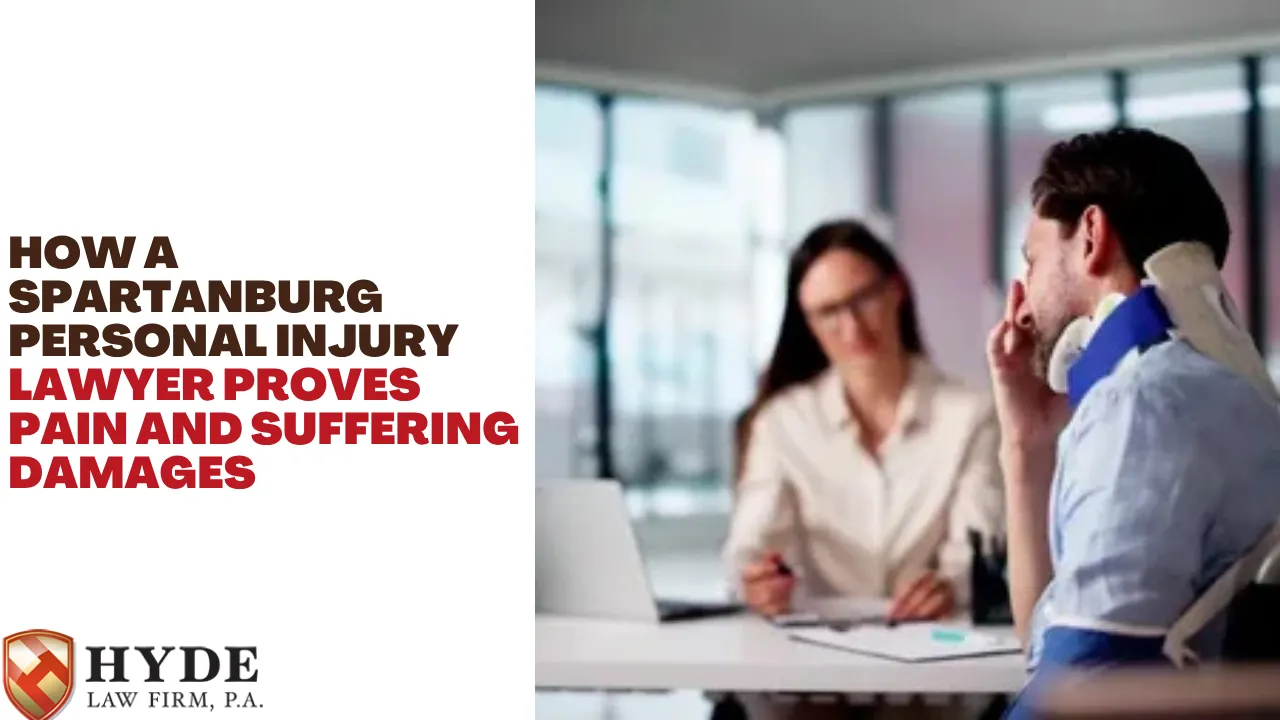
After an accident, many injuries go far beyond medical bills and lost wages. Victims often struggle with emotional trauma, chronic discomfort, anxiety, and lifestyle disruptions that significantly affect their quality of life. This is where pain and suffering compensation becomes a crucial part of a personal injury claim.
In Spartanburg, accident victims frequently rely on our attorney to demonstrate how their injuries impact everyday life. While financial losses are easier to calculate, proving non-economic harm requires strong evidence, compelling documentation, and a strategic legal approach.
Understanding how these damages are proven can help victims pursue fair compensation and protect their rights after a serious accident.

Understanding Pain and Suffering in Personal Injury Claims
Pain and suffering damages fall under what the law calls non-economic damages. These damages address the human impact of an injury rather than measurable financial loss.
Our personal injury attorney often helps clients pursue compensation for:
- Physical pain from injuries such as fractures, spinal damage, or nerve injuries
- Emotional distress, including anxiety, depression, or PTSD
- Loss of enjoyment of life and hobbies
- Sleep disruption and chronic discomfort
- Permanent disability or disfigurement
When pursuing a non-economic damages claim, our attorney must show how the injury has affected the victim’s daily life, relationships, and mental well-being.
Did You Know?
South Carolina courts allow juries to award significant non-economic damages if strong evidence demonstrates long-term suffering and life disruption.
Why Proving Pain and Suffering Is Challenging
Unlike hospital bills or repair invoices, pain is subjective. Two individuals with similar injuries may experience very different levels of suffering.
Our attorneys address this challenge by transforming personal experiences into credible legal evidence. Instead of simply stating that someone is in pain, we build a detailed narrative supported by documentation and testimony.
In Spartanburg, courts typically examine several factors when evaluating proving pain and suffering, including:
- Severity of the injury
- Length of recovery
- Impact on daily activities
- Long-term medical complications
- Emotional and psychological consequences
By presenting consistent evidence across these areas, our attorney strengthens the credibility of a claim.
Key Evidence Our Lawyer Uses to Prove Pain and Suffering
A successful case requires multiple forms of supporting evidence. Our attorney carefully collects and organizes documentation that demonstrates both physical and emotional harm.
Medical Records and Treatment History
Medical documentation is often the foundation of a pain and suffering compensation claim. These records show:
- Injury diagnoses
- Pain complaints reported to doctors
- Treatment plans and medications
- Physical therapy notes
- Long-term prognosis
Detailed medical records make it easier to connect the injury directly to the accident. If you want to know about the future damages in personal injury cases, you can read our blog.
Personal Journals and Pain Diaries
A pain journal can be extremely powerful in personal injury cases.
Victims are often encouraged to document:
- Daily pain levels
- Emotional struggles
- Limitations in work or activities
- Sleep problems
- Missed family events
Over time, this record provides clear evidence supporting a claim for injury pain damages.
Pro Tip!
Consistent entries in a pain diary can make subjective experiences far more credible in court.
Witness Testimony
Sometimes the most persuasive evidence comes from people who observe the victim daily.
Witnesses may include:
- Family members
- Friends
- Coworkers
- Caregivers
They can testify about changes they’ve seen since the accident, such as reduced mobility, mood changes, or inability to participate in hobbies.
Expert Testimony Strengthens the Case
Experts often play a major role in demonstrating long-term suffering.
Our attorney may work with:
- Medical specialists
- Psychologists and trauma experts
- Rehabilitation professionals
- Life Care Planners
These experts explain how injuries will affect a person’s future. Their testimony often strengthens cases involving compensation for emotional distress and long-term disability.
How Attorneys Calculate Pain and Suffering Damages
Although there is no universal formula, attorneys commonly rely on structured evaluation methods.
The Multiplier Method
This approach multiplies economic damages (such as medical bills) by a number typically between 1.5 and 5, depending on injury severity.
Factors influencing the multiplier include:
- Permanent injuries
- long recovery periods
- psychological trauma
- visible scarring or disability
The Per Diem Method
This method assigns a daily monetary value to the victim’s suffering and multiplies it by the number of days the victim experiences pain.
For example, if daily suffering is valued at $200 and recovery lasts 300 days, the non-economic damages could reach $60,000.
Both methods help our attorney demonstrate fair pain and suffering compensation during settlement negotiations.
Local Insight: Why Spartanburg Injury Cases Can Be Unique
Legal cases often reflect the community where they occur. Spartanburg has a busy transportation network, including major routes like Interstate 85 and Interstate 26, which frequently see traffic accidents.
The region is also home to historic sites like the Spartanburg County Courthouse, where many civil injury cases are heard.
Local juries often consider how an injury affects a person’s ability to work, participate in community life, or enjoy outdoor activities such as visiting Croft State Park. Demonstrating these lifestyle impacts can be critical when proving pain and suffering damages.
Common Mistakes That Can Hurt Pain and Suffering Claims
Even strong cases can be weakened by simple mistakes.
Our attorney helps clients avoid issues such as:
- Delaying medical treatment after an accident
- Posting injury updates on social media
- Ignoring doctor recommendations
- Failing to document symptoms consistently
- Underestimating emotional trauma
These factors can reduce credibility and weaken a non-economic damages claim. If you want to know about the common mistakes people usually make after their car accident, which eventually results in personal injury cases, you should visit our blog.
Did You Know?
Insurance companies frequently monitor social media accounts to challenge injury claims.
How Our Attorney Builds a Strong Case
At Max Hyde Law Firm, our attorneys approach every injury case with a strategy designed to present a complete picture of suffering.
This process includes:
- Conducting a detailed injury interview
- Collecting medical and psychological records
- Working with experts to analyze long-term effects
- Gathering witness statements
- Demonstrating lifestyle changes caused by the accident
In Spartanburg, presenting a compelling story backed by evidence is essential for securing fair pain and suffering compensation.
Conclusion
Proving pain and suffering requires more than simply stating that an injury hurts. It involves demonstrating how the accident has disrupted every aspect of a victim’s life, physically, emotionally, and socially. Through detailed evidence, expert testimony, and strategic legal arguments, our attorney works to secure fair pain and suffering compensation for injured clients.
If you or a loved one has been injured due to someone else’s negligence, having experienced legal representation can make a significant difference in the outcome of your case.
Contact us at (864) 804-6330 to schedule a free consultation and learn how we can help you pursue the compensation you deserve.
FAQs
Q: How does a lawyer prove pain and suffering in an injury case?
Our attorney uses medical records, witness testimony, expert analysis, and personal documentation to demonstrate how an accident caused physical pain and emotional distress. These forms of evidence help justify pain and suffering compensation during negotiations or a trial.
Q: Can emotional distress be included in personal injury damages?
Yes. Emotional trauma, such as anxiety, depression, or PTSD, may qualify for compensation if it is linked to the accident and supported by evidence.
Q: Do all injury cases include pain and suffering damages?
Most personal injury claims include non-economic damages, but the value depends on injury severity, medical evidence, and long-term impact on the victim’s life.
Q: How long does it take to recover these damages?
Timelines vary depending on the complexity of the case, the severity of injuries, and whether the claim settles or goes to trial.
Need legal help?